An OVID Health article by Shamilah Nyiramukwaya
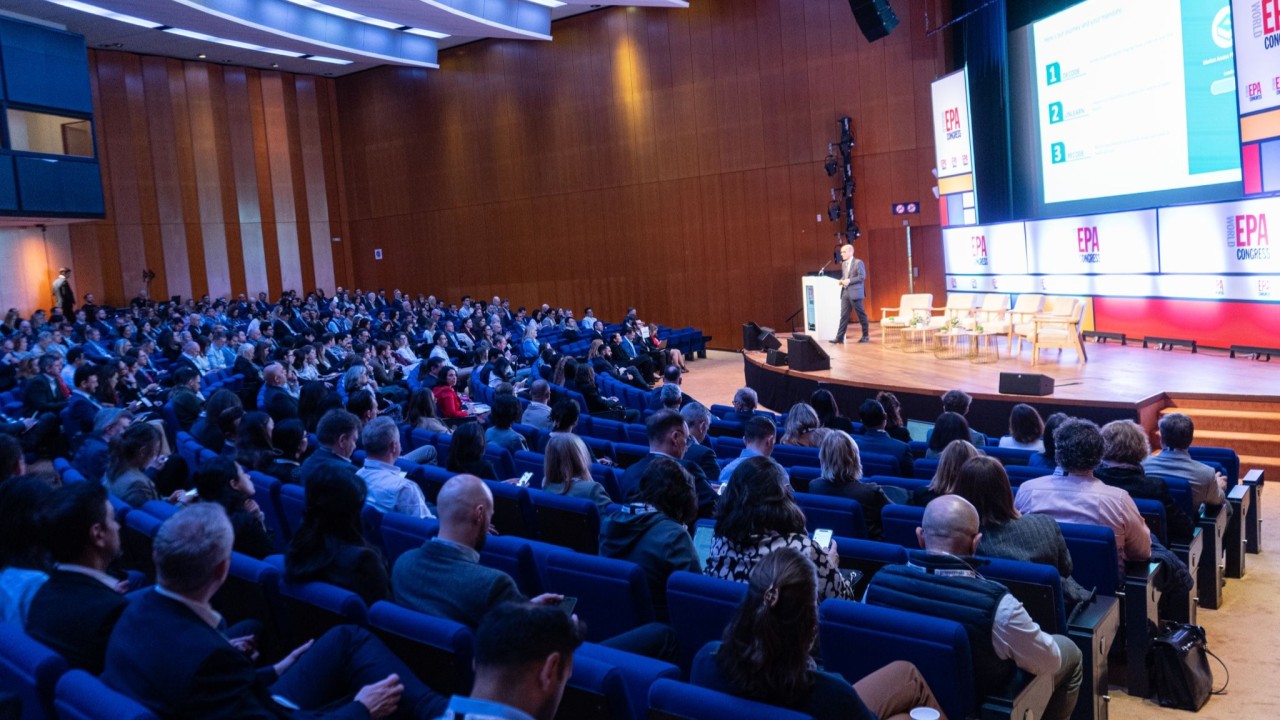
Last week, I told you I was going to the World #EPACongress to find the colleagues we need to bring along on the patient engagement journey, wherever they are.
Well. I went. I listened. And here are the reflections I brought back.
1. Value must be reframed, and patients must be part of that conversation.
Our traditional notions of value are no longer fit for purpose. QALY-based frameworks undervalue cognitive and neurological outcomes. Caregiver burden is acknowledged in theory but not always in practice. Across session after session, the message was the same. Value must be systemic, durable, and rooted in what actually matters to people living with these conditions.
It was immediately clear to me that the value conversation and the patient engagement conversation are not parallel tracks. They are the same conversation.
2. Health systems are under pressure, and the environment is shifting fast.
Geopolitical fragmentation. Constrained budgets. Reshaped industrial policy. Payers are forced into increasingly difficult trade-offs.
A mindset shift is overdue. Health must be treated not as a cost to be managed, but as an investment — like transport, like energy, like digital infrastructure. An investment that yields productivity, resilience, and economic return. That reframing could be transformative for our health systems.
3. AI: a lot of promise, and one lingering question.
AI, and more AI. Synthetic control arms. Natural history modelling. Digital biomarkers. AI-powered evidence generation. The advances are genuinely impressive, particularly for rare diseases where data scarcity has always been a barrier.
BUT. Where is the patient in all of this? AI can strengthen a dossier. It can model uncertainty. It can reach where traditional evidence cannot. But what it cannot do is tell you:
- What it actually feels like to live with a condition
- What trade-offs patients would genuinely accept
- Whether the outcomes we are prioritising are the ones that matter most
AI can solve a technical problem. It cannot solve a human one. And in the excitement, I worry we risk assuming the former can replace the latter. I’ll own that I’m a sceptic here, so happy to be challenged.
4. Rare disease is ahead. The rest of us should be paying attention.
I could not attend all ten tracks. There’s only one me. But the rare disease sessions felt meaningfully ahead on patient engagement. Some of that is structural, small populations, limited natural history data, but it is also culture. A mindset of treating patient experience not as a nice-to-have, but as a strategic input that shapes evidence, policy, and access. The question is, why aren’t other areas adopting the same approach?
5. The pulse check that stopped me in my tracks.
I ran a quick pulse check during the congress: When do you formally engage patients? Early development? Pre-submission? Around HTA?
The most common answer: before launch. Sometimes framed as eighteen months before launch. When I asked why, the answer was consistent: “We can’t really do anything before the funding decision is made.”
Here is the main tension. At the Patient Centricity conference, the consensus from patients was unambiguous: they want to be involved in early development. When endpoints are set. When comparators are chosen. When the trial design is still flexible enough to reflect what they actually need.
This is the gap that is costing us — in evidence quality, in dossier strength, and ultimately in access.
It’s also important for me to say that I spoke with some people who are already doing this, and that was very encouraging. But they remain pockets of good practice, not the norm.
6. Going together starts inside the building.
Ironically, multiple speakers echoed what the patient engagement community have been saying for years: access work still starts too late and stays too siloed. And with the EU JCA, the consequences of that will only become more visible — less room for late-stage correction, earlier scrutiny of PICO decisions, and higher expectations for cross-functional coherence from the start.
All signs point to one conclusion.
We’re going to need a bigger table.
I left Amsterdam energised, if a little frustrated. If access teams and patient engagement teams are both calling for deeper collaboration, why isn’t it happening at scale?
EPA reinforced something simple. Progress will not come from better evidence and smarter frameworks alone. It will come from better alignment, earlier partnership, and a genuine commitment to designing with — not for — the people who depend on these innovations.
That is how we move from intention to impact. And that is how we go further, together.
If you have any questions or reflections, feel free to email me at [email protected]
Article originally published on LinkedIn on 6th March 2026