An OVID Health article by Davide Scalenghe
We already know how to end HIV.
That may sound like a rather extraordinary claim to some, after four decades of one of the most devastating pandemics in modern history. But after spending a week at AIDS2026, I find it increasingly difficult to argue otherwise. Let me explain.
The science has never been more impressive. Long-acting prevention and treatment are redefining what is possible, cure research continues to advance, and the tools to dramatically reduce new HIV infections already exist.
What repeatedly stood in the way, however, was not a lack of scientific knowledge. It was the way power is exercised. At least three different forms of power surfaced throughout the conference.
The first is political power: who writes the laws, allocates public money, decides which rights are protected and determines whether healthcare systems are designed around institutions or around the people who use them.
The second is economic power: who controls investment, intellectual property, manufacturing, procurement and ultimately who is able to access life-saving innovation. Science may produce extraordinary breakthroughs, but economics often determines who benefits from them.
The third is narrative power: whose expertise is recognised, whose voices are heard, who gets invited into research and policymaking, and whose lived experience is considered legitimate evidence rather than anecdote.
When I spoke with Winnie Byanyima, Executive Director of UNAIDS, she identified three priorities: sustaining international solidarity on funding, pushing back against the global rollback of human rights and ensuring scientific innovation reaches the people who need it. Those are often treated as separate conversations but I don’t think they are. They are different expressions of the same challenge: ensuring that scientific progress translates into better health outcomes for everyone, not just for those with the greatest influence or resources.
That became even clearer in my conversation with Paulo Dos Santos from Fundación Huésped in Argentina. His argument was clear: we need to stop designing HIV prevention around institutions and start designing it around people’s lives.
If accessing #PrEP requires navigating an intimidating healthcare system, taking time off work or risking discrimination, barriers have already been created before the medicine has had any chance to work. Community organisations, pharmacies, peer networks and innovations such as Brazil’s dispensing machines for HIV prevention and treatment are not alternatives to healthcare. Increasingly, they are what accessible healthcare looks like.
The same principle applies to research.
Tomer Einav, pharmacist and researcher at Charité – Universitätsmedizin Berlin, argued that communities should not simply be invited into research once the important decisions have already been made. They should help shape those decisions from the outset.
Community engagement is too often described as a communications exercise or a box to tick before recruitment begins. In reality, it is about improving science, because the people most affected by policies, research and public health interventions are often the ones best placed to improve them.
Mental health followed a remarkably similar pattern.
In conversations with Erin Ferenchick and Yves Miel Zuñiga, FRSPH, AFCHSM, CHM, CPH from United for Global Mental Health, one message came out strong. The debate is no longer whether mental health matters in the HIV response. It is whether governments, donors and multilateral organisations are prepared to invest in it. If mental health never appears as a budget line, it will always remain a side conversation, however often people acknowledge its importance.
One of the conference’s most debated topics centred on #lenacapavir, a scientific breakthrough with the potential to transform HIV prevention and treatment.
The discussion reflected a broader challenge that extends well beyond any single medicine or company: how health systems, governments, industry, international organisations and funders ensure that major scientific advances become accessible at scale, particularly in the countries carrying the greatest burden of HIV.
Innovation is essential. But innovation cannot be the finish line. Scientific breakthroughs fulfil their purpose only when people can benefit from them.
Lastly, criminalisation remains another profound obstacle.
More than 60 countries still criminalise consensual same-sex relationships. Many also criminalise sex work and the possession of drugs. We have decades of evidence showing that criminalisation drives people away from prevention, testing and treatment. This is not simply a debate about rights. It is a debate about whether we are serious about ending HIV.
Looking back on the week, it was clear to me how often conversations about HIV echoed debates taking place elsewhere. Whether the subject is queer rights, climate justice or global health, discussions that begin with medicines, funding or public health rarely stay there for long. They become conversations about who shapes the agenda, whose expertise is valued, whose experiences influence decisions and whether scientific progress is measured by the discoveries we make or by the number of people who are ultimately able to benefit from them.
That, for me, was the thread running through the conference. Science, politics and human rights are often discussed as though they occupy separate worlds, yet almost every discussion suggested the opposite. Every breakthrough ultimately depends on decisions about funding, legislation, regulation and access. Discovery may happen in laboratories, but its impact is determined elsewhere.
If #AIDS2026 reinforced one thing, it is that ending HIV will depend far less on discovering something we do not yet know than on acting on what we already do. Designing healthcare around people’s lives rather than institutions, embedding mental health into HIV services from the outset, involving communities in research and policymaking from the beginning, removing laws that drive people away from care and ensuring life-saving innovation reaches those who need it are all within our reach.
These are not scientific challenges. They are political choices about how societies distribute power, resources and opportunity. Whether we end HIV will depend less on what we discover next than on what we choose to do with what we already know.
Article originally published on LinkedIn on 6th August
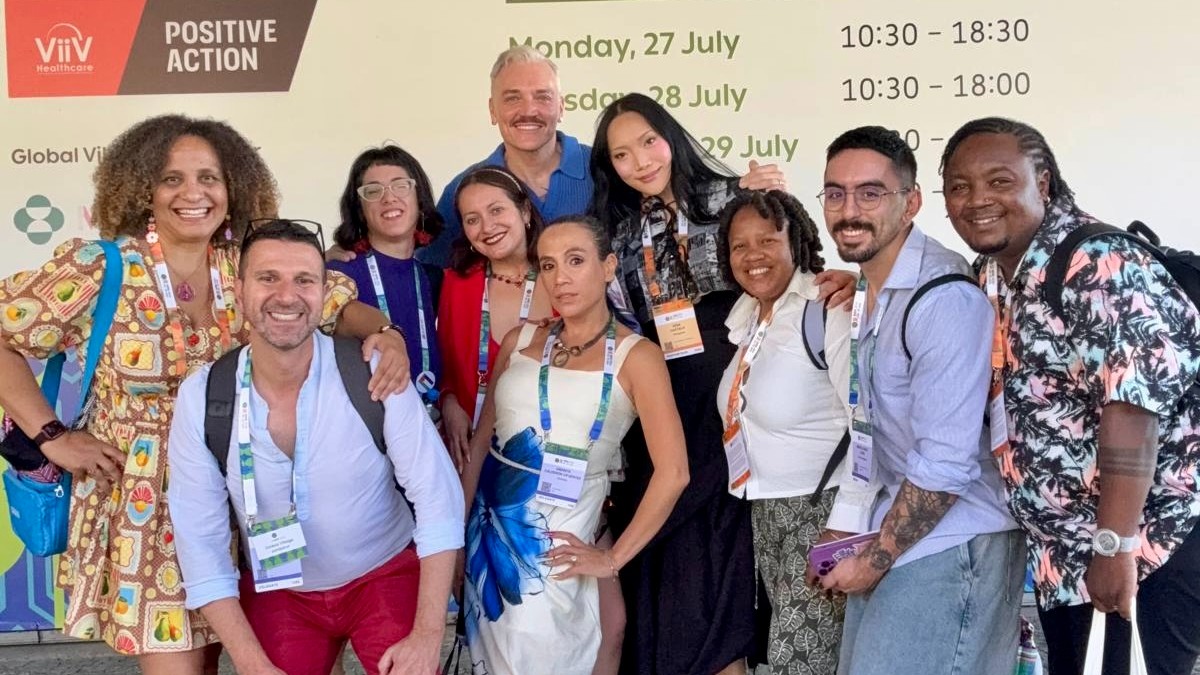
Photo credit: Davide Sclaenghe