
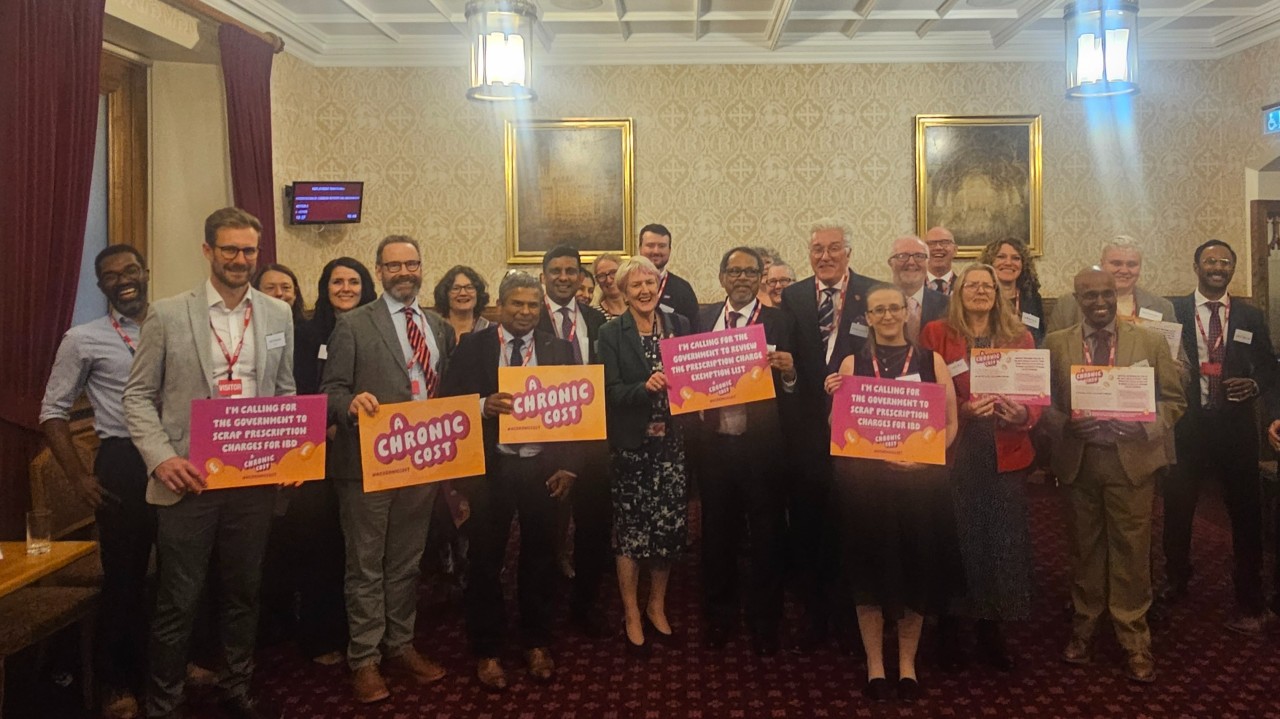
The OVID team were proud to support Tillotts Pharma UK in launching the A Chronic Cost campaign in Parliament yesterday.
Hosted by Baroness Young of Old Scone, the event shone a spotlight on the impact of prescription charges on people living with inflammatory bowel disease (IBD) in England. Featuring powerful insights from the IBD community, it brought together a diverse group of supporters, including academia, industry, healthcare professionals, and policymakers.
Why this campaign matters
IBD, which includes Crohn’s disease and ulcerative colitis, affects around half a million people in the UK, with most diagnoses occurring between the ages of 15 and 40. While there is no cure, ongoing medication is essential to control symptoms and prevent serious complications.
Yet England remains the only UK nation that still charges for prescriptions, and IBD is not included on the medical exemption list, unchanged since 1968. For many patients, this means paying for multiple prescriptions every month, an added burden during a cost-of-living crisis. Research shows nearly 1 in 10 people with long-term conditions have skipped medication due to cost, and over half reported taking time off work because of deteriorating health.
Highlights from the event
- Baroness Young opened with a personal reflection on living with IBD and why the campaign strongly resonates with her, stressing the need for reform.
- Jeremy Thorpe, Managing Director of Tillotts Pharma UK, outlined the current care landscape and the financial strain prescription charges place on patients.
- Jen Rose from IBDrelief shared her experience of living with IBD, explaining how the prospect of paying for medication for life just to stay well can feel overwhelming.
- Victoria Marie, CEO and Founder of GetYourBellyOut, emphasised the importance of better data to understand the true scale of the burden. She argued that free prescriptions should be seen as an investment in health and communities, not a handout.
- Pearl Avery, an IBD nursing lead, provided the clinical perspective, highlighting the complexity of the prescription system and the inequalities patients face.
What’s next?
The campaign’s ultimate goal is to scrap prescription charges for people living with IBD. At a minimum, speakers agreed the government should review the outdated medical exemption list and assess the cost-effectiveness of removing charges for IBD patients.
The event concluded with a networking session, offering an opportunity to share experiences and discuss next steps. This marks an important first step toward meaningful change, and we look forward to the campaign building on this momentum in 2026 and beyond.
Article originally published on LinkedIn on 29th October