
An article by Davide Scalenghe
My reflections from eastern Congo on colonial memory, mistrust and the fragility of global health systems.
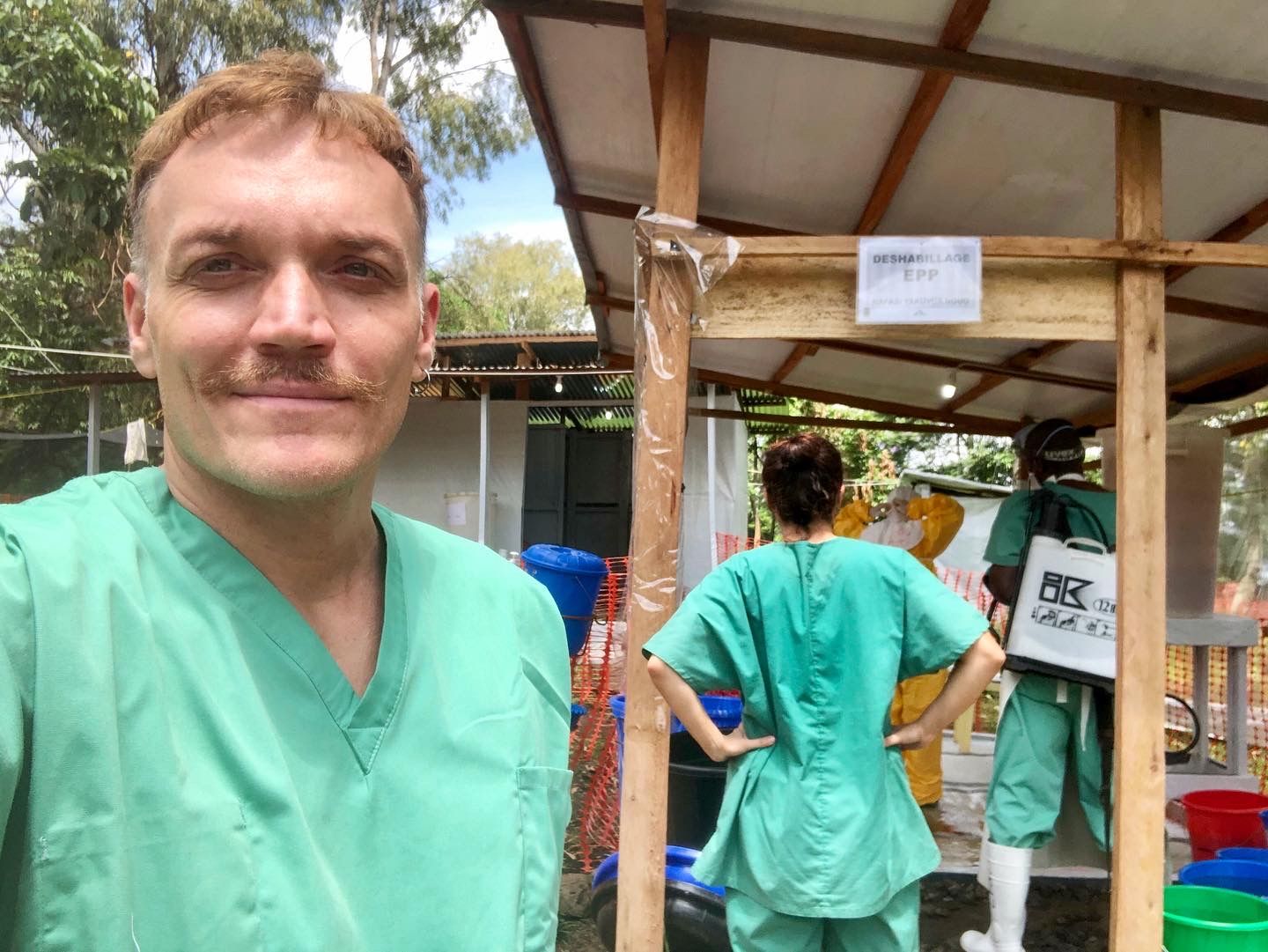
In 2019 and early 2020, I was based in eastern Democratic Republic of Congo as Field Communications Manager for Médecins Sans Frontières (MSF) during the Ebola outbreak across the Kivus. Watching the current outbreak unfold has brought a lot of that time back very vividly.
The smell of chlorine. The suffocating heat trapped inside PPE. The endless choreography of donning and doffing protective gear knowing that one small mistake could expose anyone to the virus. Patients speaking to doctors through plastic barriers that made even simple human contact feel strangely distant.
From the outside, outbreaks are discussed through the language of containment, surveillance and transmission chains. On the ground, things felt far more human – and far more political.
Many international responders struggled to understand why some communities distrusted treatment centres, vaccines or foreign organisations. But when you spent enough time listening, the mistrust rarely felt irrational. Eastern Congo carries a long memory of extraction, violence and outside powers arriving with authority and control. Colonialism is not an abstraction there. The extractive presence of the white man is part of lived political memory.
Then Ebola arrives and, almost overnight, fleets of international vehicles, compounds and security structures appear across regions where healthcare systems had long been chronically under-resourced. People asked understandable questions: why does the world suddenly care now? Why this disease and not the others killing people every day? You realise very quickly in places like eastern Congo that public health is never only about medicine. It is also about power, memory, inequality and trust.
What worries me today is that the response environment now feels even harder than in 2019: post-COVID institutional distrust, geopolitical fragmentation, disinformation spreading globally within minutes, cuts to global health funding, and a Bundibugyo strain for which there is still no approved vaccine or treatment.
Epidemics do not only expose viruses. They expose the political and moral architecture underneath societies – whose lives are protected quickly, whose suffering becomes normalised, and how much trust has already been broken long before the emergency begins.
I’ve written a longer reflection on what I saw during the Ebola outbreak in eastern Congo, and what it says about the current crisis here: https://themeparkeco.substack.com/p/what-i-saw-during-the-ebola-outbreak
Article originally published on LinkedIn on 22nd May